Introduction
After looking at space and sizing, I thought I was done evaluating soft-sided pet carriers.
I wasn’t.
Because once you read reviews carefully, another concern keeps surfacing—not loudly, but consistently:
structural safety.
The Structural Complaints Many Buyers Miss
In the same Amazon US review set, about 15% of complaints focused on structural problems rather than comfort.
- 8.9% mentioned durability issues
- 6.2% specifically reported zipper failures
The wording varied, but the situations were similar:
- bottom sagging during lifting
- base collapsing slightly
- zippers separating under pressure
For a portable soft-sided pet carrier, these aren’t minor annoyances.
They affect containment.
Why Structural Failure Matters
Soft-sided carriers rely on:
- fabric tension
- internal panels
- stitching and zippers
When one component fails, the carrier shifts.
Several reviews described the same moment:
- the bottom flexes
- the carrier tilts
- the pet panics
Scratching increases.
Pressure moves to the zipper.
Escape risk rises fast.
How Structural Safety Was Evaluated
To understand where these failures originate, I focused on four structural areas common to soft-sided pet travel bags:
- bottom support
- zipper construction
- stitching at load points
- overall soft-carrier structure
Each of these elements plays a role in how the carrier behaves once weight is applied.
Bottom Support: A Common Weak Point
Many competing soft-sided carriers use:
- a single thin insert
- often around 1 mm thick
- with minimal reinforcement
Brand A followed this approach in about 89% of reviewed models.
Under real use—lifting, walking, shifting weight—the base flexes.
Brand B showed minor improvement, but sagging still appeared over time.
Zippers: The Most Vulnerable Exit
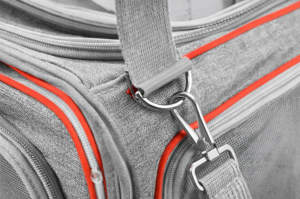
Most soft-sided pet carriers rely on plastic zippers.
They’re lightweight and inexpensive—but far less tolerant of sudden force.
Reported failures included:
- zipper teeth separating
- sliders cracking
- jamming under tension
Once a zipper fails, containment is compromised immediately.
Stitching and Load Points
The highest-stress areas are:
- handle-to-body connections
- bottom seams
Standard stitching loosens over time with repeated lifting.
As stitching weakens, stress transfers simultaneously to the base and the zipper, increasing the likelihood of failure under load.
Structural Approach That Performs Better
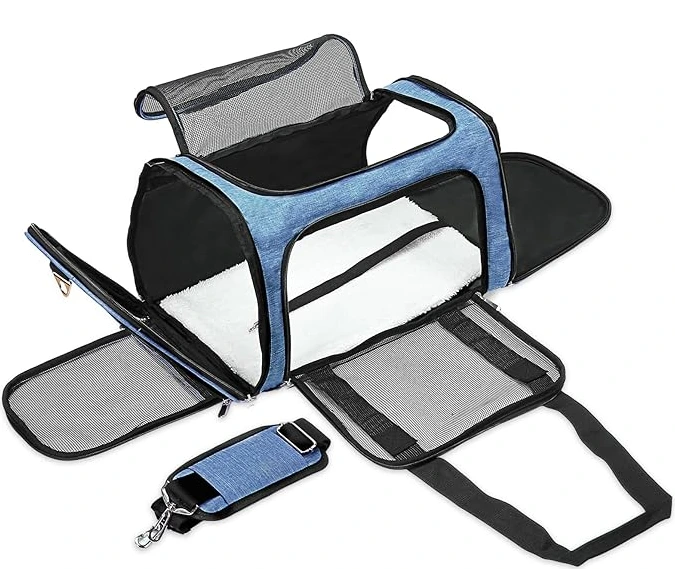
The evaluated design took a different approach—still soft-sided, but reinforced:
- dual-layer ABS bottom board with cross reinforcement
- all-metal zippers, tested for 500 cycles
- reinforced stitching, handle load rated at 30 lbs
- semi-rigid internal support to help prevent collapse
The goal isn’t to turn a soft carrier into a hard crate.
It’s to make a soft-sided carrier predictable and stable under movement.
Final Takeaway on Safety
For portable soft-sided pet carriers, safety depends on structure.
A carrier that sags or fails at the zipper isn’t just inconvenient.
It introduces unnecessary risk during transport.
If there’s one area where compromise matters most, it’s structural integrity.
Data Source
Observations based on Amazon US customer reviews (approximately 405 total), collected between April 2024 and January 2026.
Leave a Reply
You must be logged in to post a comment.