Last winter, I took Luna to the vet for her vaccinations. The waiting room was warm, the air a little stuffy. A girl next to me was holding a brand-new pink cat carrier—still fresh out of the package, not even half an hour old—and crouching on the floor trying to coax her cat inside.
Suddenly, a sharp chemical odor filled the waiting room. It smelled like burnt plastic mixed with cheap glue, with a sour aftertaste. The Golden Retriever that had been dozing nearby lifted its head and sneezed. A nurse poked her head out of the exam room, frowning. “What’s that smell coming from your carrier? Maybe set it outside to air out—it’s not great for people either.”
The girl’s face turned red. She awkwardly carried the carrier outside. Her cat was crying inside—loud, frantic cries.
Watching her walk out, I suddenly remembered the first pet carrier I bought two years ago.
The First Mistake: The Carrier That Still Stank After Three Days on the Balcony
In early 2022, I had just adopted Luna. I saw a “viral” cat carrier on a livestream. The host swung it around, saying, “Super lightweight, foldable, breathable mesh, fits cats up to 10 lbs.” The price? Only $20. I figured: since I’m a new cat owner, I’ll start with something cheap and test it out.
Three days later, the package arrived. The moment I pulled the carrier out of the plastic mailer, a strong plastic smell hit my nose. I instinctively leaned back, holding the bag at arm’s length. My husband asked from the other room, “What’s that smell?”
I said, “It’s new. It’ll air out.”
I hung the carrier on the balcony clothes rack, windows wide open. There was a breeze that day, the bag swaying in the wind. I figured one night would do it.
The next morning, I leaned in to smell it—still there. A little fainter, but still strong.
Day three—still strong.
Day four—I gave up. I put it in the sun for an entire afternoon. When I brought it in that evening, the smell had baked in, stronger than before.
That carrier ended up abandoned in the corner of the balcony. Every time I walked past it, I felt like I’d paid $20 for a lesson in what not to buy.
Scrolling Through Reviews: Turns Out I Wasn’t Alone
After that, I got serious. What exactly is that smell? What’s the difference between cheap and quality materials? Why do some carriers last for years while others crack and flake after a few uses?
I dug through negative reviews about “smell,” “quality,” and “mesh damage” across e-commerce sites and found plenty of people with the same experience.
Some people opened the package and immediately gave up:
“Strong smell when opened the package. Had to air it out for days, but it never really went away.”
Others tried everything:
“Very plastic-y chemical smelling fabric. I washed it, sprayed it with fabric freshener, left it outside for a week. Still smells.”
And one person put it bluntly:
“Feels cheap. Smells cheap. Because it is cheap.”
When I read that, I couldn’t help but laugh. That was exactly the carrier sitting on my balcony.
Where Does That Smell Actually Come From?
With that question in mind, I started paying attention to materials across different price points. Over the years, I’ve bought seven or eight carriers—some terrible, some great. Slowly, I started to figure things out.
That sharp “new car” or “new plastic” smell comes down to three different material types:
1. Recycled Materials (The Worst)
To cut costs, some cheap carriers use recycled plastic pellets that are melted down and spun into fabric. This process mixes in impurities, dye residues, even printing ink. The finished fabric looks fine—but when heated (like in summer sun or a hot car), those chemicals off-gas.
Typical signs: Sharp, pungent smell; makes your throat scratchy. A few days of airing reduces it, but sun exposure brings it right back.
2. PVC (Polyvinyl Chloride)
PVC itself isn’t toxic, but to make it flexible, large amounts of plasticizers are added during production. Low-grade plasticizers slowly release molecules into the air—that’s the “plastic smell.” Worse, PVC becomes brittle in extreme heat or cold.
One user described this brittleness in a review:
“Used it once in winter and the bottom cracked when I folded it.”
3. Low-Quality Oxford Fabric vs. Quality Nylon
“Oxford” is just a weaving method; what matters is the fiber.
Low-quality polyester Oxford: Rough, stiff texture—feels like cheap umbrella fabric. The coating often peels over time, leaving white flakes.
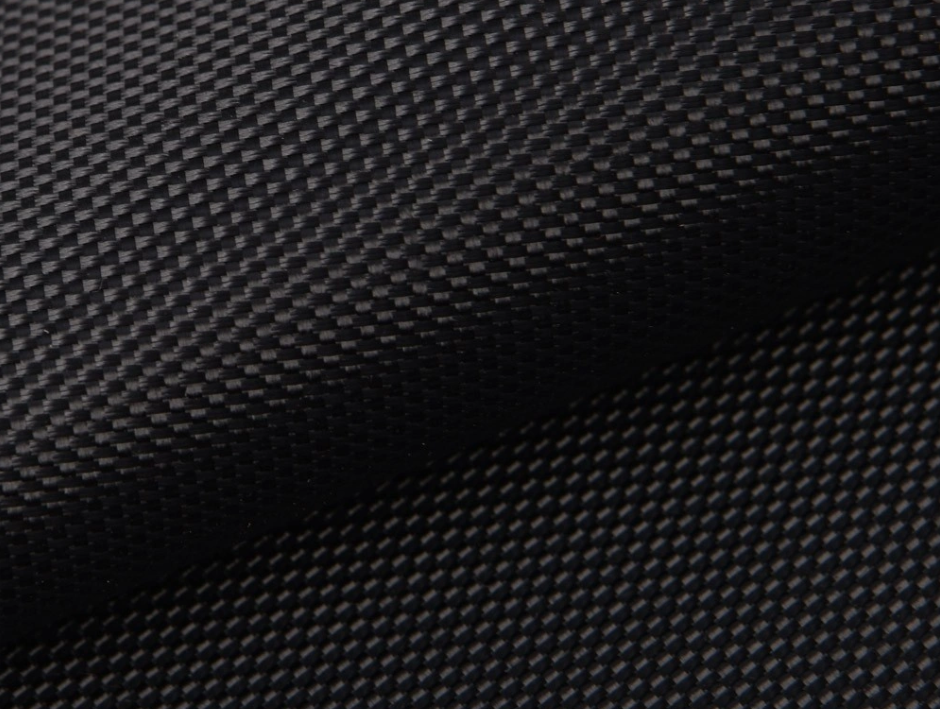
Quality nylon (e.g., 1680D ballistic nylon): Smooth, supple texture. Resilient, doesn’t crease. Good nylon has almost no smell; any faint adhesive odor dissipates after half a day of airing.
One review stuck with me:
“Loose threads, very plastic-y fabric. Feels like it won’t last a month.”
That word “plastic-y” captures it perfectly—it’s not fabric, it’s “plastic pretending to be fabric.”
More Than a Smell: The Hidden Risks
Once, while getting Luna a check-up, I asked the vet about carrier materials. She said something that stopped me cold:
“You know, I’ve seen cats whose owners said they drooled and panted in their carriers, assumed it was stress. Then they switched carriers, and all the symptoms disappeared.”
She explained that a cat’s sense of smell is a dozen times stronger than a human’s, and they breathe faster too. Half an hour in a small, enclosed space filled with off-gassing chemicals is like a human breathing exhaust fumes for hours. Some cats cry; some hide; some go silent and endure it. But that doesn’t mean they’re okay.
After that, I started noticing “invisible complaints” in reviews:
“My cat used to be fine in carriers. Now she cries the whole time in this one.”
“She doesn’t meow, just sits there looking miserable. I feel so bad.”
“Took him to the vet in this and he was panting by the time we arrived. Never happened before.”
Not one of these reviews mentions “smell.” But the symptoms—anxiety, crying, panting—match exactly what the vet described. It made me wonder: if I’d actually used that balcony carrier, what would Luna have been trying to tell me?
How to Judge Material: Three Simple Tests
You don’t need lab equipment. Your nose, eyes, and fingers are enough to tell you 80% of what you need to know.
Smell: The Moment You Open the Box Matters Most
Red flag: A sharp, throat-burning, eye-watering smell right out of the package. Likely recycled material or cheap PVC.
Normal: A mild adhesive smell—like a new pair of sneakers or a new backpack. Gone after half a day to a full day of airing.
Good: Almost no smell. Even with your nose close, just a faint fabric scent.
One user shared her hindsight:
“I should have returned it the moment I opened the box. The smell was that bad. But I thought it would go away. It didn’t.”
Look: Scratch the Surface with Your Fingernail
Find an inconspicuous spot (like the bottom edge). Scratch firmly with your fingernail a few times.
Cheap coated fabric: Leaves white powder or tiny flakes. That coating will start peeling. Over time, those flakes get into your pet’s fur.
Quality fabric: No visible mark, or just a temporary indent that disappears when you rub it.
Touch: Texture Doesn’t Lie
Low-quality polyester: Rough, stiff, dry—like a cheap umbrella or an insulated food delivery bag. Squeeze it, and you’ll see lots of tiny creases.
Quality nylon (e.g., 1680D ballistic nylon): Smooth, soft, substantial. Dense but resilient. No creases even after folding.
PU-coated leather: Good PU feels supple and slightly warm; cheap PU feels hard and brittle—fold it and you’ll see fine cracks.
Another trick: look at the seams. Good carriers use edge binding to hide raw edges. Cheap ones leave fabric edges exposed; over time, those edges fray and unravel. A user complained:
“After three uses, the edges started fraying. Cheap material.”
Travel Reality Check: Materials Under Extreme Temperatures
Last year, I took Luna on a flight to Thailand. At security, the officer put the carrier through the X-ray machine. When it came out the other side, I saw tiny beads of condensation all over the fabric—the plane cabin had been cold, and now it was hitting tropical humidity.
My carrier was 1680D ballistic nylon. I wiped it down, and it was fine. But the passenger next to me wasn’t so lucky. As her carrier came out of the machine, I heard a faint crack. A seam at the fold had split open.
That’s the test materials face in extreme conditions:
- Cold (aircraft cargo holds can be below freezing): Cheap PVC becomes stiff and brittle—fold it, and it cracks.
- Heat (a car in summer can exceed 140°F / 60°C): Cheap coatings soften, get sticky, and off-gas more.
- Humidity swings: Cheap Oxford fabric molds; cheap hardware rusts.
One user wrote:
“Took this on a trip to Florida. By day three, the bottom was sagging and the mesh started peeling away from the frame.”
In extreme environments, material weaknesses become impossible to ignore.
FAQ
Q: My new carrier has a smell. How long is normal for it to air out?
A: A mild adhesive smell that dissipates within 24-48 hours is normal. If it still smells strongly after 72 hours of airing, it’s likely a material issue. Return it. One reviewer summed it up:
“I kept it because I thought the smell would fade. It didn’t. Now I’m stuck with a smelly bag.”
Q: Can I use a PVC carrier?
A: Yes, if it’s from a reputable brand. Good PVC carriers use odor-free plasticizers and have proper lamination. The problem isn’t PVC itself—it’s cheap PVC.
Q: How can I tell material quality from the product listing?
A: Look for specifics. “High-density Oxford fabric” means nothing. “1680D ballistic nylon” means something. If the listing just says “premium material” without details, be cautious.
Q: My carrier liner is flaking after a year. What do I do?
A: That’s coating degradation. It won’t get better—it means you bought coated fabric, not solution-dyed nylon. Replace it. Those flakes can be ingested by your pet.
Bottom Line: Material Is the Foundation
Among the 5,000+ reviews I’ve read, one line stood out:
“Poor quality overall.”
Translation: everything is wrong. But when you think about it, “overall poor quality” starts with materials. Cheap fabric = smells. Cheap coating = flakes. Cheap hardware = rust. Weak seams = tears.
Material is a carrier’s foundation.
My three non-negotiable rules when choosing a carrier:
- Spend a little more to avoid strong smells. If it still stinks after three days of airing, it’s a hard pass.
- Only trust specific material specs. “Premium fabric” is empty talk; “1680D ballistic nylon” is real.
- Do the scratch test on arrival. If your fingernail leaves white flakes, send it back.
You’re not just buying a bag. You’re buying the ground your pet stands on, the air they breathe, and the walls they touch while on the road. Choosing good materials is worth it.
Have you ever bought a carrier based on looks or price, only to regret it later? Share your story in the comments—especially that moment when you opened the box and thought, “There’s no way this smell is okay.”
Leave a Reply
You must be logged in to post a comment.