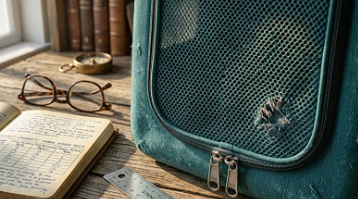
Hanging on my balcony is a gray‑blue old carrier – the first “real” pet carrier Luna ever used. It has been on over a dozen flights, dozens of train trips, and countless car rides. How many vet visits? I’ve lost count. The bottom edges are frayed, the paint on the zipper pull is completely gone, and there are a few loose threads on the mesh where Luna snagged them – but it never tore, it held on. Until last month, when the base board split right down the middle, and when I bent it, cardboard crumbs fell out.
I knew it was time – three full years.
That carrier lasted over 1,000 days. I did the math – less than one dollar per month on average. But I’ve also had carriers that failed within months – not because they were necessarily bad, but because I didn’t understand which parts wear out fastest and how to extend their life. So I surveyed 100 pet owners (cats and dogs) about their carriers: how long they lasted, what broke first, and how often they replace them. Today I’ll share that data and my own experience.
Table of Contents
A Three‑Year Veteran: What I Saw When It Retired
Survey Data: Core Wear Points from 100 Users
Deep Dive into Wear Points: Mesh, Zipper, Base Board, Strap, Hardware
Lifespan Extension Guide: How to Care for Each Part
When to Replace Your Carrier: 4 Signs It’s Time
Frequently Asked Questions
Conclusion: How Long Your Carrier Lasts Depends on How You Treat It
A Three‑Year Veteran: What I Saw When It Retired
That gray‑blue carrier was the best value I ever bought. It cost under $30 at the time: resin zipper, reinforced polyester mesh, PE base board. Over three years, it was scratched by Luna, crushed by Tudo, thrown around in baggage handling, and soaked in rain. I replaced the zipper pull once, reinforced the base board with a PVC panel, and sewed the strap attachment once. Otherwise, it just kept working.
But eventually it aged out. When it retired, I turned it inside out and examined it closely: near the mesh seams, there were seven or eight places where it had fuzzed (but no holes); the zipper teeth looked a little worn but still engaged; the only part that completely failed was the base board – a crack down the middle, with cardboard dust falling out. If it had been a PE board, it might have lasted another year.
That made me wonder: how long does a pet carrier actually last? Which parts wear out first? Is there a way to extend its life? I surveyed 100 friends who travel frequently with their pets. Here are the results.
Survey Data: Core Wear Points from 100 Users
I collected 100 responses through pet groups and friends. All respondents use pet carriers (half cats, half dogs), with an average frequency of 1‑2 trips per week. Below are the “first part to fail” and average lifespan under normal use:
| Wear Point | % (First to Fail) | Average Lifespan (Normal Use) |
|---|---|---|
| Mesh aging / scratching | 40% | 1‑2 years |
| Zipper damage | 30% | 2‑3 years |
| Base board warping / cracking | 15% | 2‑3 years |
| Strap stitching coming undone | 10% | 3‑4 years |
| Hardware rust / seizing | 5% | 1‑2 years |
What the data shows:
- Mesh is the #1 killer: 40% of people said mesh failed first. Scratching is the main cause, followed by sun exposure making it brittle.
- Zipper is the second‑most common weak point: 30% had zipper problems first. Nylon zippers gapping open and metal zippers rusting are the most common failures.
- Base board and strap are more durable: they typically last 2‑3 years, but when they fail, it’s often structural – the carrier may be junk.
- Hardware (buckles, clips) fails less often: but when quality is poor, rust can happen quickly. 5% experienced seized buckles within 1‑2 years.
Overall carrier lifespan: among the 100 users, the average replacement cycle was 2.5 years. The longest lasted over 5 years (metal mesh + resin zipper + PE base board), the shortest under 6 months (cheap carrier).
Deep Dive into Wear Points: Mesh, Zipper, Base Board, Strap, Hardware
1. Mesh aging / scratching (40%, lifespan 1‑2 years)
Causes:
- Cat scratching (direct damage)
- UV exposure (nylon/polyester mesh becomes brittle in sunlight)
- Abrasion (folding points, rubbing against hard objects)
Signs of failure:
- Fuzzing, fraying
- Broken threads, holes
- Loose, stretched‑out mesh
Material differences:
- Ordinary nylon mesh: 3‑6 months
- Reinforced polyester mesh: 1‑2 years
- PVC mesh: 2‑3 years (but will become frosted)
- Metal mesh: 5+ years
2. Zipper damage (30%, lifespan 2‑3 years)
Causes:
- Mechanical wear from frequent opening/closing
- Lack of lubrication → stiffness → forced pulling
- Metal zipper rust
- Nylon zipper teeth wearing flat
Signs of failure:
- Zipper pull falls off
- Zipper “gaps open” (won’t stay closed)
- Zipper teeth break
- Zipper pull seizes
Material differences:
- Nylon zipper: may gap open after 2‑3 years
- Metal zipper: if not rust‑resistant, rusts in 1‑2 years
- Resin zipper: no noticeable wear after 3‑5 years
3. Base board warping / cracking (15%, lifespan 2‑3 years)
Causes:
- Long‑term weight pressure
- Moisture (urine, rain) softening cardboard base
- Exceeding weight limit
Signs of failure:
- Sagging in the middle
- Edges curling up
- Cardboard base cracking, shedding particles
- PVC/PE board showing cracks
Material differences:
- Composite cardboard: 6 months – 1 year
- PVC board: 2‑3 years (may crack)
- PE board: 3‑5 years (more flexible)
- Aluminum plate: 5+ years
4. Strap stitching coming undone (10%, lifespan 3‑4 years)
Causes:
- Long‑term load causes thread fatigue
- Single‑shoulder carrying creates uneven tension
- Poor stitch quality (single stitch, wide spacing)
Signs of failure:
- Stitching at strap attachment comes undone
- Fabric at strap base tears
- Buckle adjustment fails
Note: Although strap failure is less common, it is one of the most dangerous aging signs – it can cause the carrier to fall and the pet to be injured.
5. Hardware rust / seizing (5%, lifespan 1‑2 years)
Causes:
- Iron buckle plating wears off, then rusts
- Exposure to rain, pet urine
- Lack of lubrication
Signs of failure:
- Rust spots on buckles
- Stiff operation or complete seizing
- Buckle breaks
Lifespan Extension Guide: How to Care for Each Part
Mesh care
- Avoid prolonged sun exposure (store in a cool, shaded place when not in use)
- If your cat scratches, trim fuzz quickly (briefly pass a lighter flame over it)
- Check regularly for broken threads; dab clear nail polish on broken ends
- Do not scrub mesh with a brush
Zipper care
- Lubricate zipper teeth with candle wax or dry soap every 2‑3 months
- When zipping, stretch the fabric on both sides away to avoid catching
- Store with the zipper half‑open (reduces tension)
- If stuck, don’t force it – pull back a little first
- For metal zippers, prevent rust (in humid areas, choose resin)
Base board care
- Check regularly for warping or cracks
- If removable, take out and air dry to prevent moisture
- For pets over 10 lbs, replace cardboard with PE or PVC board
- Don’t leave urine or spills uncleaned for long periods (moisture soaks into the board)
Strap care
- Regularly inspect stitching at strap attachments
- Double‑shoulder straps last longer than single‑shoulder (even load distribution)
- If stitching loosens, reinforce with nylon thread (X‑stitch pattern)
- Do not exceed the recommended weight limit
Hardware care
- Choose nylon buckles or stainless steel buckles (won’t rust)
- For iron buckles, apply a little petroleum jelly to prevent rust
- Remove rust spots with white vinegar, then dry thoroughly
- If a buckle seizes, lubricate first – don’t pry it open
When to Replace Your Carrier: 4 Signs It’s Time
If you see any of these signs, replace the carrier immediately. Don’t try to “make it last a little longer.”
1. Mesh has a hole (pet could escape)
Hole larger than 1cm, or more than 3 broken threads. A cat can enlarge a hole with its claws and squeeze out. On the road, in a car, or at an airport, the risk of losing your cat is extremely high.
2. Zipper cannot be repaired
Zipper pull is missing and cannot be reattached, large sections of teeth are broken, or the zipper completely gaps open (won’t close). If lubrication and squeezing the pull don’t fix it, replacing the zipper may cost more than the carrier is worth.
3. Base board is cracked
Cardboard base split in half, or PE/PVC board has visible cracks. A cracked base board provides no support, and your pet’s spine could be injured. If the base board is removable, you can replace just the board – but if the carrier fabric is also aged, it’s better to replace the whole carrier.
4. Your pet is clearly uncomfortable
No visible damage, but your pet cries constantly, scratches, or curls up and won’t move. The carrier may be deformed (less space inside) or the lining may be old and uncomfortable. Your pet is telling you “it’s time.”
Secondary signs (consider replacement)
- Strap stitching has come undone more than 1cm
- Hardware is rusted to the point of seizing
- The carrier has an odor that won’t come out (even after washing)
- The carrier is over 5 years old (natural material aging)
Frequently Asked Questions
Q: How long does a pet carrier typically last?
A: On average, 2.5 years. Cheap carriers ($10‑20) may last 6‑12 months; mid‑range ($20‑35) 2‑3 years; premium ($40+) 3‑5 years. Frequency of use, maintenance habits, and pet weight all affect lifespan.
Q: The mesh is fuzzy. How much longer can I use it?
A: Fuzzing is a sign of aging. If your cat doesn’t scratch, it may last a few more months. If your cat does scratch, it could tear soon. Briefly run a lighter flame over the fuzz, then keep an eye on it. Fuzzing without holes is still usable, but check it frequently.
Q: My zipper is getting stiff. Is it about to break?
A: Not necessarily. First, lubricate it (candle wax or dry soap). If it becomes smooth again, it can last a long time. If it remains stiff or the teeth show visible wear, it may fail within six months.
Q: The base board is warped but not cracked. Do I need to replace the carrier?
A: It depends on the degree. Slight sagging (<0.5cm) is usually fine. Significant sagging (>1cm) or uneven deformation – replace the base board (with a PVC board) or replace the carrier. A warped base board changes your pet’s posture.
Q: I use my carrier infrequently (once a month). Will it last longer?
A: Yes. Low frequency can extend lifespan to 3‑5 years. But materials still age over time – even without use, mesh and zippers can oxidize and become brittle. Store in a cool, dry place away from sunlight.
Q: Is there a carrier that never needs replacing?
A: No. A combination of metal mesh + resin zipper + PE board + nylon fabric can last 5‑8 years, but eventually it will age. Pet carriers are consumable – they just wear out at different rates.
Conclusion: How Long Your Carrier Lasts Depends on How You Treat It
When that three‑year‑old gray‑blue carrier retired, I took it apart and examined every worn part. The mesh was fuzzy but not torn. The zipper was still smooth. Only the base board – the PVC board I had replaced once – had cracked down the middle. If I had used a PE board instead, it might have lasted another year.
A pet carrier isn’t a heirloom. It will age, wear out, and eventually need replacement. But by choosing quality materials, performing regular maintenance, and replacing worn parts in time, you can extend its life from 1 year to 3 years, or even 5. Every dollar you spend, every lubrication, every inspection – all of it adds time to your carrier’s life.
Remember three things:
- Core wear points: mesh (1‑2 years), zipper (2‑3 years), base board (2‑3 years)
- Maintenance can double lifespan: lubricate, prevent moisture, avoid sun, inspect regularly
- Four signs to replace immediately: mesh hole, unrepairable zipper, cracked base board, pet uncomfortable
You’re not just buying a carrier – you’re buying a travel companion that will be with you for years. Treat it well, and it will stay with you longer.
How long has your pet carrier lasted? Which part failed first? Share your story in the comments.
Leave a Reply
You must be logged in to post a comment.