I’ve always wondered: between a $20 carrier and a $60 carrier, where does that extra money actually go?
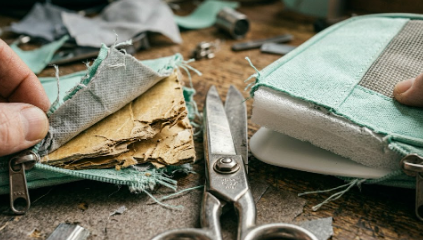
Some people say “expensive is just a tax on stupidity,” others say “you get what you pay for.” I didn’t want to rely on hearsay. I bought two carriers myself – one for about $20, one for about $60, both soft‑sided, both roughly the same size. Then I took scissors and cut them open.
This article isn’t a review – it’s an autopsy. I’ll show you the difference between the two carriers, layer by layer, from the outside in. If you’re trying to decide whether to buy cheap or expensive, you should have your answer by the end.
Table of Contents
Two Carriers, One Pair of Scissors
Destructive Comparison: From the Outside In – Five Layers Fully Analyzed
Material Cost Analysis: A Cheap Carrier’s Materials Cost Less Than a Third of Its Price
Cost‑Performance Calculation: Cheap Is “Installment Payments,” Expensive Is “Buy Once, Cry Once”
Buying Advice: The Mid‑Price Range Is Your Best Bet
Frequently Asked Questions
Conclusion: Expensive Isn’t Always Better, but Cheap Is Almost Always Worse
Two Carriers, One Pair of Scissors
The cheap carrier came from an online marketplace – tens of thousands sold per month, and the pictures looked pretty good. The expensive one came from a specialty pet store – a branded product with a few thousand monthly sales. The day they arrived, I put them side by side on the floor. The cheap one was light as a paper bag when I lifted it; the expensive one had heft and could stand on its own when empty.
When I opened the cheap carrier’s shipping bag, a strong plastic smell hit my nose. The expensive carrier had almost no smell.
I picked up my scissors and cut open the bottom of each carrier. Not to repair – to see. Here’s what I found.
Destructive Comparison: From the Outside In – Five Layers Fully Analyzed
| Component | $20 Carrier | $60 Carrier |
|---|---|---|
| Outer fabric | Single‑layer thin polyester – translucent, scratches leave fuzz | 1680D ballistic nylon – thick, abrasion‑resistant, no marks from scratching |
| Middle layer | None (fabric is the outer layer) | Waterproof coating + 3mm cushioning foam – springy when pressed |
| Lining | Cheap polyester – pills, feels rough to the touch | Soft fleece – doesn’t pill, smooth, cat claws don’t snag |
| Base board | Yellowed cardboard – snaps when bent, softens when damp | PE board (polyethylene) – flexible, doesn’t crack, waterproof |
| Zipper | Unbranded plastic teeth – rough, catches | YKK resin zipper – smooth, branded logo |
| Frame | None – empty carrier collapses, side presses in easily | Aluminum support rods (removable) – empty carrier stands, spring‑back when pressed |
| Hardware | Iron alloy buckles with plating – rusts in a week | Nylon buckles + zinc alloy zipper pulls – no rust, no jamming |
| Stitching | Single‑stitch, wide spacing (∼4mm), many loose threads | Double‑stitch + overlock, tight spacing (∼2mm), no loose threads |
Detailed findings
Outer fabric: The cheap carrier’s fabric was like umbrella material – translucent; when held up to a light, you could see the shadow of your finger. Scratching it with a fingernail left white fuzz. The expensive carrier’s fabric was thick and dense, made a rustling sound when rubbed, and a fingernail left no mark. 1680D ballistic nylon at this thickness and density will last years without wearing through.
Middle layer: The cheap carrier had only one layer of fabric – no middle layer. The expensive carrier had a waterproof coating and a 3mm thick cushioning foam between the outer fabric and the lining. That foam provides padding when your pet leans against the wall, plus insulation and sound dampening.
Lining: The cheap carrier’s lining was that common cheap polyester – rough to the touch, and a light brushing with a scrub brush made it pill. If a cat scratched inside, it would fuzz up within days. The expensive carrier’s lining was soft fleece – doesn’t pill, doesn’t snag claws. Luna used to scratch the lining in cheap carriers; after switching to fleece, she stopped – because there’s no satisfying texture to scratch.
Base board: This was the biggest difference. The cheap carrier’s base was composite cardboard – a thin fabric outer layer with yellowed, compressed paper fibers inside. It snapped when bent. A fingernail left a dent. This kind of board softens when damp and will bend within 2‑3 months. The expensive carrier’s base was PE board (polyethylene) – white, semi‑transparent, flexible. It bends but doesn’t break, and springs back when released. Waterproof, durable, and won’t deform after 2‑3 years.
Zipper: The cheap carrier’s zipper teeth were plastic, rough, and made a grating sound when pulled. The zipper pull had no branding and was magnetic (iron). The expensive carrier’s zipper was YKK – the top brand in zippers. It pulled smoothly with no resistance and little noise. The pull was zinc alloy – no rust.
Frame: The cheap carrier had no frame. When placed empty on the floor, it collapsed. Pressing the side pushed it all the way in. The expensive carrier had removable aluminum support rods. It stood on its own, and pressing the side produced clear spring‑back. This frame is the most fundamental difference – one is a “bag,” the other is a “structure.”
Stitching: The cheap carrier was single‑stitched with wide spacing (about 4mm between stitches), no edge binding on the seams, and when you turned the lining inside out, there were loose threads everywhere. The expensive carrier was double‑stitched with tight spacing (about 2mm), seams were bound, and the lining was neat with no loose threads.
Material Cost Analysis: A Cheap Carrier’s Materials Cost Less Than a Third of Its Price
Based on the dissection and publicly available industry information, I estimated the material costs of the two carriers (excluding labor, shipping, and marketing):
| Component | $20 Carrier Material Cost | $60 Carrier Material Cost |
|---|---|---|
| Outer fabric | $0.50‑1 | $4‑6 |
| Middle layer | $0 | $1‑2 |
| Lining | $0.50‑1 | $2‑3 |
| Base board | $0.10‑0.30 | $1‑2 |
| Zipper | $0.30‑0.50 | $2‑3 |
| Frame | $0 | $3‑4 |
| Hardware | $0.10‑0.30 | $1‑2 |
| Trim (thread, fasteners, etc.) | $0.30‑0.50 | $1‑2 |
| Total | About $2‑4 | About $15‑22 |
The cheap carrier’s material cost is under $5. The remaining $15 goes to profit, shipping, and platform fees. The expensive carrier’s material cost is about $15‑20, with the rest covering R&D, quality control, brand premium, and after‑sales support.
Key takeaway: What you’re saving on a cheap carrier isn’t “brand markup” – it’s “safety features.” No frame, cardboard base, single‑layer thin fabric, cheap zipper. These aren’t “good enough” – they’re “luck‑dependent.”
Cost‑Performance Calculation: Cheap Is “Installment Payments,” Expensive Is “Buy Once, Cry Once”
Real‑world lifespan
- Cheap carrier: 3‑6 months of normal use. The base bends, the zipper catches, the lining pills, the fabric wears. Not “worn out” – “unusable.”
- Expensive carrier: 2‑3 years of normal use. The base stays flat, the zipper remains smooth, the lining stays intact, the fabric resists wear.
Cost per month
- Cheap carrier: Assuming 4 months of use – about $5 per month.
- Expensive carrier: Assuming 2.5 years (30 months) – about $2 per month.
The more expensive carrier is actually cheaper per month.
Cost per trip
- Cheap carrier: Assuming 1 trip per week, 4 months = about 16 trips – about $1.25 per trip.
- Expensive carrier: 1 trip per week, 2.5 years = about 120 trips – about $0.50 per trip.
Hidden costs of cheap carriers
- Pet anxiety leading to behavioral problems.
- Mid‑trip failures that ruin your plans.
- Bent base causing spinal stress.
- Zipper failure risking your pet escaping.
Hidden benefits of expensive carriers
- Pet is relaxed and quiet inside.
- No need to replace carriers frequently or re‑acclimate your pet each time.
- Reliable – no worry about sudden failures.
Buying Advice: The Mid‑Price Range Is Your Best Bet
Budget under $20 – not recommended
If you only have about $20 to spend, I suggest waiting and saving up to $40‑60 for a carrier that will last 2‑3 years. A $20 carrier isn’t “saving money” – it’s “installment payments.” You’ll replace it every few months, pay more in the long run, and your pet will be uncomfortable every time.
Budget $30‑50 – acceptable but choose carefully
At this price, you can find carriers with a rigid base and double stitching, but not YKK zippers or a frame. Suitable for short trips and light use. But don’t expect 2 years of life.
Budget $50‑80 – the sweet spot
At this price, you can get: 1680D nylon, PE or composite wood base board, YKK zipper, aluminum frame (on some models), removable liner. Under normal use, 2‑3 years is realistic.
Over $80 – premium options
Hard‑shell kennels, imported brands, professional airline carriers. Consider these if you frequently take long flights or have a pet over 15 lbs.
My advice: $50‑80 is the “sweet spot” for value. Below $40, you’re almost certainly compromising on materials. Above $80, diminishing returns set in.
Frequently Asked Questions
Q: Is a $20 carrier really unusable?
A: It’s usable, but risky. For very short trips (under 15 minutes), with a very light pet (under 5 lbs), and infrequent use (once or twice a month), it might work. But don’t expect safety, durability, or comfort.
Q: How do I choose a brand in the $50‑80 range?
A: Look at specs, not brand names. 1680D nylon, PE base board, YKK zipper, removable liner – if a carrier has these features, it will likely cost $50‑80, and the brand matters less.
Q: I’ve had a $20 carrier for six months and it’s still fine – did I get a deal?
A: Two possibilities: either you got lucky with a “quality control outlier,” or your pet is very light and you use it very infrequently. That’s not the general rule. Most $20 carriers won’t last six months.
Q: Are there any “cheap but good” carriers?
A: Very few. If you can find a carrier around $30 with a PE base board, double stitching, and a smooth zipper, it could be worth buying. But it will take time to search.
Conclusion: Expensive Isn’t Always Better, but Cheap Is Almost Always Worse
After cutting open both carriers, I laid their insides side by side on the table. The cheap carrier’s cardboard base was already bent; the expensive carrier’s PE board was still flat. The cheap carrier’s single‑layer fabric was translucent; the expensive carrier’s nylon was thick and solid. The cheap carrier’s zipper teeth already had white powder from wear; the expensive carrier’s YKK zipper was still as smooth as new.
The difference between $20 and $60 isn’t a brand logo. It’s the difference between cardboard and PE board. Between single‑layer fabric and double‑layer foam. Between no frame and an aluminum frame. These differences only become visible when you cut the carrier open.
If you’re choosing a carrier, don’t just look at pictures and prices. Flip the lining, press the base board, run the zipper back and forth – those checks take less than five minutes, but they can save you a year or two of trouble.
You’re not just buying a carrier – you’re buying your pet’s “safe room” on the road. The foundation, walls, and door of that room determine how long it will last.
What’s the cheapest carrier you’ve ever bought? How long did it last? Share your experience in the comments.
Leave a Reply
You must be logged in to post a comment.