When people talk about problems with a soft-sided pet carrier, size usually comes up first.
That’s not surprising.
If a carrier feels too small, you notice it immediately. What’s more interesting is what doesn’t show up right away.
After a few weeks of actual use—multiple vet visits, short trips, carrying it around the house—a different set of issues starts to surface.
They’re not obvious in product photos, and they’re rarely mentioned in the first few reviews.
But over time, they quietly determine whether the carrier keeps getting used or ends up pushed into a closet.
After going through 405 real customer reviews across different soft-sided pet carriers, one pattern kept repeating: once size and layout stop being the main concern, materials, cleaning, and everyday usability begin to matter far more than most people expect.
The Issues People Don’t Notice Until They’ve Used the Carrier for a While
Reading through longer-term feedback, the same themes appeared again and again:
- Material quality problems (roughly 9–10%) — fabric tearing, stitching coming loose, strong odors, padding losing shape
- Cleaning limitations — liners that can’t be removed, smells that never fully go away
- Carrying convenience issues — handles that hurt the hand, weight that feels fine at first but tiring later, folding that’s more theory than practice
- Pet behavior mismatch — anxious cats becoming more stressed, kittens finding escape points
On their own, none of these always sound serious. But when several happen together, many owners stop reaching for the carrier—even though it hasn’t technically “broken.”
Material Quality: Where Lifespan and Safety Start to Overlap
Some of the most uncomfortable comments weren’t about comfort at all, but about things failing earlier than expected:
“After three uses, the side fabric tore and my cat almost got out.”
“The stitching around the handle started coming loose almost immediately.”
Across reviews, about 60% of material-related complaints involved torn fabric or failed stitching. These problems showed up most often around:
- Handle attachment points
- Bottom edges, where weight and movement concentrate
Once fabric integrity is compromised, it’s no longer just about appearance. Owners start worrying about containment, especially with active or nervous pets.
Odor Issues Tend to End a Carrier’s Life Quietly
Odor complaints don’t dominate the data, but they carry a lot of weight in practice.
“Strong plastic smell out of the box. Even after airing it out, it didn’t fade.”
“My cat started sneezing as soon as it went inside.”
For pets with sensitive airways, a persistent chemical smell is enough to make the carrier something they actively avoid. In many cases, the carrier gets replaced long before it wears out structurally.
Padding Quality Affects Behavior More Than Most People Expect
Padding problems often show up gradually:
“After a month, the pad flattened completely. My cat stopped going inside.”
Roughly a quarter of material complaints involve padding that loses shape or support. Once the carrier stops feeling stable or comfortable, pets notice—and owners often stop using it, even if everything else still looks fine.
Cleaning and Maintenance: Where Frustration Builds Over Time
This came up more often than expected.
“My cat had an accident inside. The liner doesn’t come out, so I could never clean it properly.”
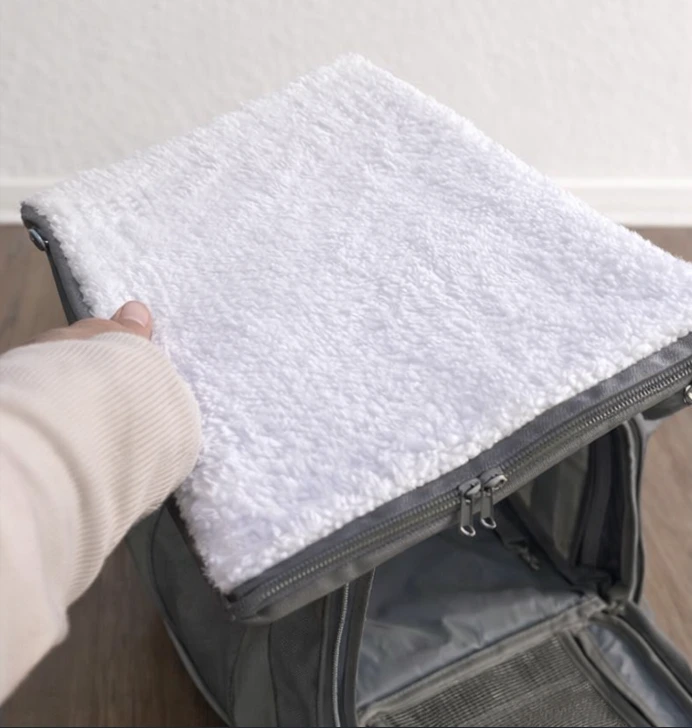
When liners aren’t removable, real cleaning becomes difficult. Wiping the surface helps visually, but moisture and odor tend to linger—things pets detect long before people do.
Designs that allow:
- Removable, machine-washable liners
- Water-resistant inner coatings
- Faster drying
tend to hold up much better after months of use.
Carrying Convenience: Small Discomforts That Add Up Fast
Handle complaints showed up frequently in everyday feedback:
“After five minutes, my hand was red and sore.”
Thin or unpadded handles concentrate pressure, especially with heavier pets or longer walks.
Weight also becomes noticeable sooner than many expect:
“Empty, it already feels heavy. With my cat inside, it’s exhausting.”
What feels manageable at first can quickly turn into something people avoid using unless they have to.
Folding That Looks Good on Paper but Not in Real Life
Many carriers are described as foldable, but real-world feedback suggests folding only matters if it’s genuinely easy and compact.
“It folds, but still takes up too much space to bother.”
If folding is awkward or bulky, most owners simply stop doing it.
Pet Behavior Is Where Design Choices Really Show
Anxious pets tend to react first.
“Small space plus poor airflow made my cat panic before we even arrived.”
Among owners of anxious cats, satisfaction drops sharply when design doesn’t account for psychological comfort.
Features that tend to help include:
- Partial privacy or adjustable coverage
- Multiple entry points
- Quiet zippers
- Padding that feels stable, not saggy
Kittens, on the other hand, expose escape weaknesses quickly:
“My kitten figured out the zipper.”
Oversized mesh, weak closures, or missing secondary locks turn curiosity into real risk.
How These “Small” Issues Affect Long-Term Use
When several of these problems stack up, patterns become obvious:
- Loading takes longer
- Stress behaviors increase
- One-handed use becomes difficult
- Hygiene declines over time
Carriers that get these basics right tend to stay in regular use. Others slowly get left behind, even if nothing is visibly broken.
What a Well-Rounded Soft-Sided Pet Carrier Usually Gets Right
Across materials, cleaning, convenience, and behavior compatibility, stronger designs tend to share the same fundamentals:
- Reinforced fabric with clean stitching
- Low-odor materials
- Padding that holds its shape
- Removable, washable liners
- Padded, comfortable handles
- Reasonable empty weight
- Practical folding
- Secure, pet-proof closures
None of these are flashy features. But together, they determine whether a carrier remains part of daily life—or quietly disappears from it.
Final Thoughts
Size and layout get the attention early on. But materials, cleaning, everyday usability, and pet behavior compatibility are what decide whether a soft-sided pet carrier actually works over time.
The real test isn’t how a carrier looks out of the box. It’s how it holds up after weeks of carrying, cleaning, and repeated use.
Leave a Reply
You must be logged in to post a comment.